










Seasonal Menu Planning vs. Fixed Menus? Why Smart Menu Rotation Ensures Sustainable Profitability in the HoReCa Industry?
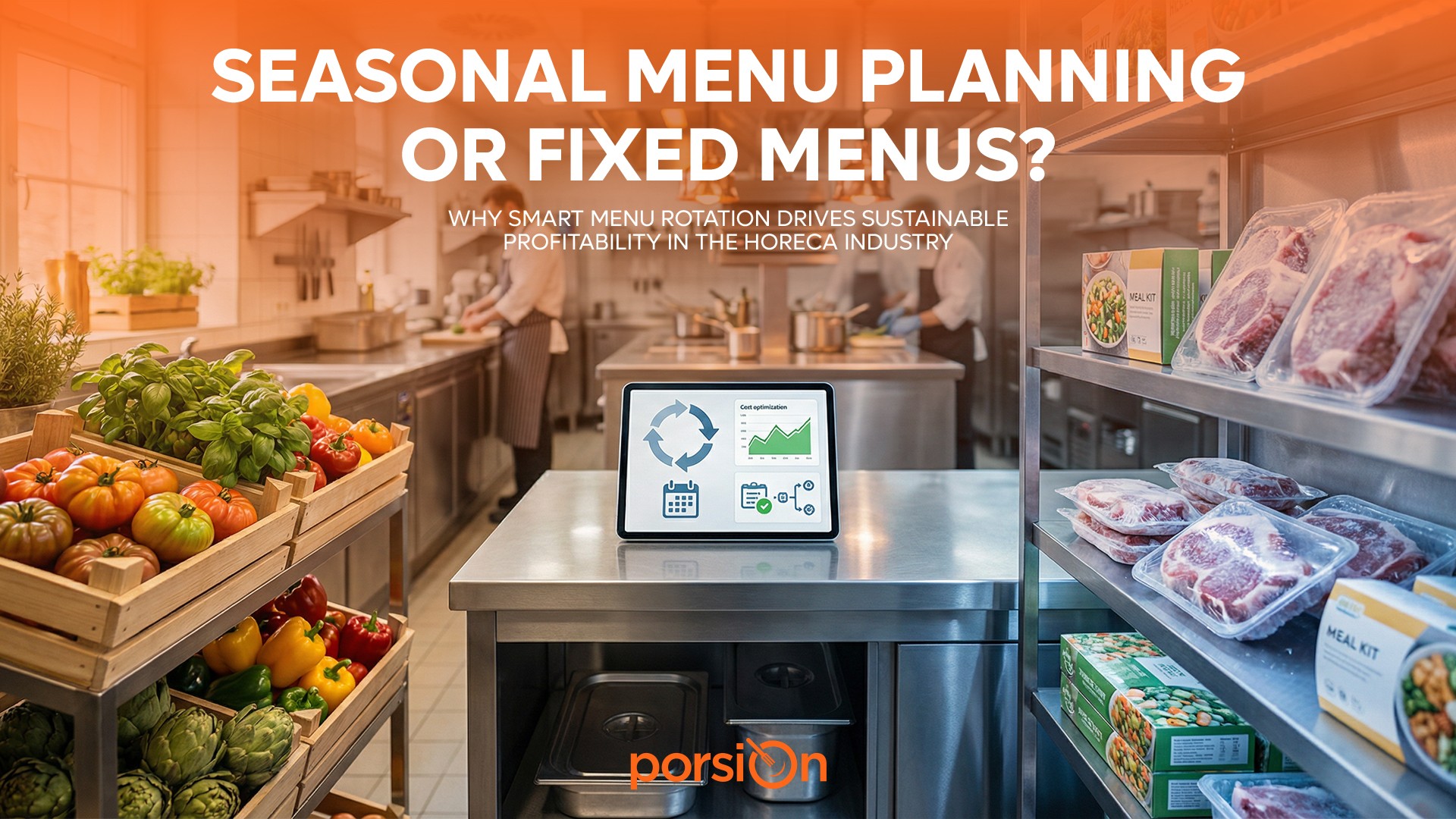



The HoReCa industry encompassing hotels, restaurants, and cafés operates in a highly competitive and fast-moving ecosystem where margins are tight and operational precision is essential. Success in this sector does not rely solely on culinary creativity or prime location. Instead, it depends on cost management, operational efficiency, inventory control, and strategic menu planning.
With rising raw material prices, supply chain volatility, and evolving consumer expectations, food businesses are under increasing pressure to adopt smarter and more flexible management strategies. In particular, food cost control and food cost optimization have become central to restaurant profitability. This is where menu planning moves beyond being a culinary decision and becomes a core financial strategy.
The key question for HoReCa operators is clear: Should businesses rely on fixed menus, or adopt seasonal menu planning supported by smart menu rotation?
From a long-term sustainability perspective, the answer is clear: Strategic, data-driven menu rotation delivers stronger financial performance.
Why Menu Planning Is a Financial Decision in the HoReCa Industry
Many businesses view menus primarily as marketing tools. However, in professional kitchen management, the menu directly shapes the cost structure of the operation.
Menu composition influences:
Purchasing strategyInventory management
Portion control
Production planning
Waste management
Profit margins
A poorly structured menu can lead to high inventory costs, increased food waste, operational inefficiencies, and inconsistent profitability. Even high sales volumes cannot compensate for weak cost control.
For this reason, menu planning in the HoReCa industry should be approached as a financial optimization strategy rather than a static product list.
Fixed Menus: Operational Comfort or Strategic Risk?
Fixed menus may appear to provide operational simplicity. Staff become familiar with recipes, procurement becomes standardized, and kitchen routines stabilize. However, over time, this model reveals structural weaknesses.
1. Rising Food Costs and Margin Pressure
Using out-of-season ingredients increases purchasing costs and directly affects food cost ratios. In a fixed menu structure, pricing flexibility is limited, meaning that cost increases reduce profit margins rather than being strategically absorbed.
2. Inefficient Inventory Management
Maintaining constant stock levels for fixed menu items can create overstocking risks. Demand fluctuations may result in surplus inventory and increased food waste. In large-scale hotel kitchen management operations, this issue becomes even more significant due to volume.
3. Repetitive Customer Experience
Modern consumers seek variety and innovation. Repetitive offerings may weaken brand perception and reduce customer engagement. In a competitive HoReCa environment, stagnation can lead to customer loss.
While fixed menus may offer short-term operational comfort, they often lack the flexibility required for sustainable long-term growth.
What Is Seasonal Menu Planning and Why Is It More Advantageous?
Seasonal menu planning involves strategically integrating cost-efficient, high-yield ingredients based on seasonal availability. However, this approach goes beyond simply adding seasonal dishes. The real advantage lies in structured and controlled menu rotation strategies.
Through smart menu rotation, businesses can:
Improve purchasing predictabilityIncrease inventory turnover
Reduce food waste
Maintain a dynamic menu
Strengthen food cost control
This model offers both financial flexibility and operational efficiency, making it highly suitable for the HoReCa industry.
How Smart Menu Rotation Supports Food Cost Optimization
Food cost optimization is one of the most critical performance indicators in restaurant and hotel operations. When menu rotation is strategically planned, it balances cost fluctuations and protects margins.
For example:
High-cost ingredients can be limited during peak price periodsAlternative ingredients can be introduced strategically
Portion control can protect profitability
Menu engineering can simplify low-performing items
Standardization plays a crucial role in this process. Working with portion-controlled, consistent-quality products simplifies cost forecasting and operational planning.
At this point, PorsiOn provides a strategic advantage. By offering frozen food solutions specifically designed for HoReCa businesses, PorsiOn supports operational efficiency while enabling seasonal flexibility. With long shelf life and standardized portions, businesses can maintain inventory stability and reduce food waste without sacrificing quality.
How Frozen Food Solutions Strengthen Seasonal Strategies
One of the biggest concerns when implementing seasonal menu planning is product continuity. Supply risks during seasonal transitions can create operational instability.
Professional frozen food solutions address this challenge by providing:
Extended shelf lifeProtection against seasonal supply fluctuations
Consistent product quality
Predictable cost structures
This approach is particularly valuable in high-volume hotel kitchen management operations, where consistency and reliability are essential. By combining seasonal planning with frozen product stability, businesses achieve both flexibility and operational control.
The Connection Between Menu Rotation and Brand Perception
Smart menu rotation is not only a cost management strategy; it also strengthens brand positioning. Seasonal updates create a perception of freshness and innovation, which positively impacts:
Customer engagementSocial media marketing potential
Brand differentiation
Customer loyalty
In the HoReCa industry, sustainable growth requires aligning operational discipline with marketing dynamism.
Why Smart Rotation Wins in the HoReCa Industry
While fixed menus may provide short-term operational comfort, flexibility is the most valuable asset in a cost-sensitive industry like HoReCa. Seasonal menu planning supported by smart rotation enables:
Stronger food cost optimizationImproved food cost control
Better inventory management
Reduced waste
Increased restaurant profitability
Choosing the right operational partner is essential to successfully implementing this strategy. PorsiOn supports HoReCa businesses with tailored frozen food solutions that enhance efficiency, control costs, and enable sustainable profitability.
In today’s competitive environment, the winners are not only those who cook well but those who manage their menus strategically.